
| ⚡ TL;DR — Quick Answer
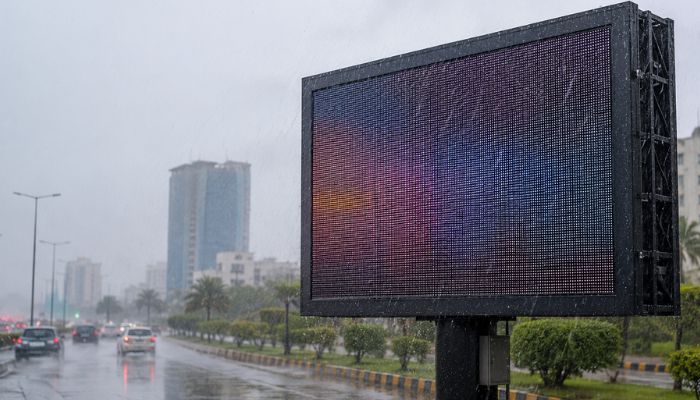
The lifespan of outdoor SMD screens typically ranges from 50,000 to 100,000 hours, depending on how well they handle three key environmental threats: heat, dust, and rain. Excessive heat degrades LEDs and internal circuits faster. Dust clogs ventilation and causes overheating. Rain and moisture corrode components unless an IP65 or higher rating is in place. Smart One Technologies designs its outdoor SMD screens with industrial-grade heat dissipation, sealed cabinets, tempered glass fronts, and anti-corrosion coatings to withstand Pakistan’s extreme climate — delivering maximum lifespan with minimal maintenance. Key factors: IP rating | Brightness (nits) | Thermal management | Dust protection | Cabinet sealing | Maintenance schedule |
Introduction: Why Lifespan Matters for Outdoor SMD Screens
If you have ever stood in front of a bright, vivid outdoor SMD screens on a hot summer afternoon in Lahore or Karachi, you already know the kind of brutal conditions these displays endure every single day. The scorching sun beats down, dust swirls in from every direction, and monsoon showers dump liters of water without warning. It is a harsh world out there — and your outdoor LED display has to survive all of it while continuing to deliver sharp, bright visuals.
The real question that businesses, advertisers, and digital signage buyers ask is simple: how long will my outdoor SMD screens last? The answer depends on a combination of engineering quality, environmental exposure, protection ratings, and maintenance habits. This guide breaks all of that down in practical, honest detail — because at Smart One Technologies, we believe an informed buyer makes the best investment.
Whether you are planning a roadside LED billboard, a stadium display, a retail outdoor screen, or a smart city signage project, understanding what shortens — and what extends — the lifespan of outdoor SMD screens will save you thousands of rupees and years of headaches.
1. What Are Outdoor SMD Screens and Why Are They Different?
SMD stands for Surface-Mounted Device — a technology where red, green, and blue LED chips are mounted directly onto a single diode package and then soldered onto a printed circuit board (PCB). Unlike older DIP (Dual In-line Package) LEDs, SMD LEDs pack three colour emitters into one tiny unit, allowing for tighter pixel pitches, wider viewing angles, and much better colour mixing.
Outdoor SMD screens are engineered for a completely different set of demands compared to indoor displays. They need to be significantly brighter — typically 5,000 to 10,000 nits — to remain clearly visible under direct sunlight. They need to withstand wind load, vibration, water ingress, UV exposure, and temperature swings that could range from below 10°C in winter nights to above 50°C on rooftops in peak summer.
This is exactly why Smart One Technologies sources and manufactures outdoor SMD screens with a very different set of specifications than indoor panels. Every component — from the LED brand to the power supply unit (PSU), the cabinet material to the waterproofing gaskets — is selected with outdoor durability as the first priority.
2. How Heat Affects the Lifespan of Outdoor SMD Screens
The Heat Problem in Pakistan’s Climate
Pakistan sits in a climate zone that is genuinely brutal for electronic equipment. In cities like Multan, Sukkur, and Jacobabad, ambient temperatures regularly cross 45°C to 50°C in peak summer. For an outdoor LED display mounted on a rooftop or a south-facing wall, the effective operating temperature inside the cabinet can climb to 65°C or even higher. That level of heat does not just cause discomfort — it actively destroys electronic components over time.
How Heat Degrades LED Lifespan
LED chips are semiconductors, and semiconductors follow a very well-documented principle called Arrhenius’s Law of Thermal Degradation: for every 10°C rise in operating temperature, the rate of degradation approximately doubles. In practical terms, this means an outdoor SMD screen running at 60°C inside its cabinet will degrade roughly twice as fast as one running at 50°C. The most visible symptom of heat damage is lumen depreciation — your screen gradually loses brightness over the years until the content is no longer clearly visible in daylight.
Beyond LEDs themselves, heat attacks the entire electronics ecosystem inside the display. Capacitors on the power supply boards dry out and fail faster under high temperatures. Solder joints expand and contract with every temperature cycle, eventually developing micro-cracks that cause intermittent or permanent connection failures. The plastic diffuser lenses covering SMD diodes become yellow and brittle, scattering light in the wrong direction and creating visible hotspots on the display.
Heat Management Solutions That Extend Lifespan
The best outdoor SMD screen manufacturers address heat through a layered thermal management strategy. Here is what separates a high-quality outdoor display from a cheap one when it comes to heat:
- Active cooling with industrial-grade exhaust fans that automatically adjust speed based on internal temperature sensors
- Passive heat dissipation through aluminium heat sinks bonded to power supply units and driver ICs
- Thermally conductive interface materials (thermal paste or pads) between heat-generating components and the cabinet structure
- Cabinet designs with natural convection channels that move hot air upward and out without trapping it
- Smart temperature monitoring systems that automatically reduce brightness when internal temperature thresholds are exceeded
- Placement consulting to avoid south-facing installations without shade during peak afternoon hours
At Smart One Technologies, every outdoor SMD screens installation in Pakistan is accompanied by a thermal assessment of the installation site. Our team evaluates sun direction, wind availability, mounting surface heat absorption, and ambient temperature data specific to your city to recommend the right cooling configuration.
3. How Dust and Particulate Matter Shorten Outdoor LED Display Life
The Dust Reality of South Asian Environments
If heat is the silent killer of outdoor SMD screens, dust is the slow suffocator. Pakistan’s environment — particularly in cities like Peshawar, Quetta, Faisalabad, and across Punjab’s agricultural belt — generates enormous quantities of airborne particulate matter. Fine dust, construction debris, pollen, and industrial particulates settle into every gap and vent of an outdoor display if the cabinet is not properly sealed.
What Dust Actually Does to Your Outdoor SMD Screen
Dust accumulation inside an LED display cabinet creates several cascading problems. First, it acts as an insulating blanket over heat-generating components — exactly the opposite of what good thermal management tries to achieve. PCBs covered in dust retain heat instead of releasing it, leading directly to the temperature-related degradation described above.
Second, dust particles in the presence of humidity can create conductive pathways across circuit boards. This phenomenon, called dendritic growth, causes micro-short-circuits that are nearly impossible to diagnose and repair without completely replacing the affected board.
Third, dust accumulation on the front glass or diffuser panels scatters light and reduces apparent brightness — meaning your 8,000-nit outdoor SMD screens starts behaving like a 5,000-nit one without any actual LED degradation having occurred. Regular cleaning addresses this, but in high-particulate environments, cleaning frequency must be doubled or tripled compared to cleaner urban settings.
Dust Protection Through Cabinet Engineering
The primary defence against dust is the IP (Ingress Protection) rating of the display cabinet. The IP rating uses a two-digit system — the first digit indicates protection against solid particles (like dust), and the second indicates protection against liquids (like water). For outdoor SMD screens in dusty environments, a minimum rating of IP54 is considered baseline, but IP65 is strongly recommended for most Pakistani conditions. IP65 means complete dust-tight sealing plus protection against water jets from any direction.
- IP54: Dust protected (limited ingress), splash resistant
- IP65: Fully dust-tight, protected against low-pressure water jets
- IP66: Fully dust-tight, protected against powerful water jets
- IP67: Fully dust-tight, protected against temporary immersion
Smart One Technologies supplies outdoor SMD screens rated at IP65 as the standard minimum for all outdoor installations, with IP66 recommended for coastal areas and flood-prone zones. Our cabinet gaskets are made from EPDM rubber, which maintains its sealing properties across the full temperature range Pakistan experiences — unlike cheaper silicone gaskets that harden and crack in extreme heat.
4. How Rain and Moisture Damage Outdoor SMD Screens
The Monsoon Challenge
Pakistan’s monsoon season transforms the climate from furnace-dry to relentlessly wet in a matter of days. For outdoor LED displays, this transition is particularly stressful. Components that have been thermally expanding in 50°C heat suddenly contract as rain cools surfaces rapidly. Seals that were adequate when first installed may have compressed and relaxed thousands of times over a year, leaving microscopic gaps that rain readily exploits.
Water ingress into an outdoor SMD screen is often catastrophic rather than gradual. A single compromised seal during a heavy downpour can allow enough moisture inside to short-circuit an entire display section, destroy power supply units, or trigger an immediate failure. Unlike heat damage, which typically develops over months, water damage can destroy a display in a single night.
How Moisture Attacks Different Components
Water interacts differently with various parts of an outdoor LED display system. Understanding these interactions helps in choosing the right protection:
- PCBs and driver ICs: Water on circuit boards causes immediate short circuits if power is on. Even after drying, mineral deposits from evaporated water create resistive paths that slowly degrade signal quality and can reignite failure under future humidity events.
- Power supply units: PSUs contain large electrolytic capacitors that are highly vulnerable to moisture. Water ingress into a PSU typically causes immediate failure and sometimes fires.
- LED modules: While modern SMD LEDs are themselves somewhat moisture-resistant due to epoxy encapsulation, the solder connections beneath them are not. Flux residue left from manufacturing, when combined with moisture, can cause corrosive galvanic reactions at solder joints.
- Cabinet structure: Aluminium cabinets are generally corrosion-resistant, but steel hardware (bolts, hinges, brackets) can rust quickly in wet environments if not properly coated or replaced with stainless alternatives.
- Connectors and cabling: Internal data cables and power connectors are particularly vulnerable to moisture-induced corrosion at contact points, causing intermittent data loss and visual artefacts.
Waterproofing Strategies That Work
Effective waterproofing of outdoor SMD screens requires more than just an IP65 rating on paper. Smart One Technologies implements a comprehensive waterproofing methodology:
- Conformal coating on all PCBs: A thin polymer coating is applied to circuit boards, protecting them from moisture even if some water does penetrate the cabinet
- Double-seal cabinet design: Front access panels use both a compression gasket and a drainage channel, so any water that bypasses the outer seal is directed downward and out before reaching electronics
- Positive pressure ventilation: In high-humidity environments, a slight positive air pressure inside the cabinet prevents moisture-laden outside air from being drawn in through any micro-gaps
- Drain holes: Strategically placed drainage holes at the bottom of the cabinet allow any condensation to exit rather than pool on cabinet floors
- Tempered glass fronts: Rather than plastic diffusers, tempered glass front panels resist UV degradation and seal more reliably against rain
5. Environmental Threat Summary: At-a-Glance Comparison
The table below consolidates the key outdoor SMD screen lifespan factors discussed in this guide:
| Threat Factor | Risk Level | Primary Damage | Protection Solution |
| Extreme Heat | High | LED degradation, PSU failure, circuit burnout | Active cooling, heat sinks, thermal paste |
| Dust Accumulation | Medium-High | Ventilation blockage, overheating, short circuits | IP65+ sealed cabinet, dust filters, regular cleaning |
| Monsoon Rain | High | Corrosion, short circuits, water ingress | IP65/IP66 rating, gasketed seals, drainage vents |
| UV Radiation | Medium | Colour fading, plastic degradation, lens clouding | UV-resistant coatings, tempered glass, anti-reflective film |
| Humidity | Medium | Condensation inside cabinet, PCB rust, LED failure | Silica gel packs, conformal coating, sealed enclosures |
| Wind & Vibration | Low-Medium | Loose connectors, cabinet stress, mounting fatigue | Reinforced mounts, vibration-damping brackets |
6. LED Quality and Brightness Ratings: A Hidden Lifespan Factor
Not all SMD LEDs are created equal. The LED chips themselves — their semiconductor quality, bin sorting, and encapsulation material — are perhaps the single most important determinant of long-term outdoor screen lifespan. High-tier outdoor SMD screens use LEDs from brands like Nationstar, Cree, or Epistar, which are rigorously binned for colour consistency and luminous efficacy.
Brightness is measured in nits (cd/m²). Outdoor SMD screens need between 5,000 and 10,000 nits to remain clearly visible under direct sunlight. However, running LEDs at maximum brightness 24/7 accelerates degradation. The industry metric L70 indicates the point at which a display has lost 30% of its original brightness — this is considered the end of useful life. A quality outdoor SMD screen should achieve 100,000 hours at L70 under controlled conditions, though real-world outdoor operation in Pakistan’s climate typically yields between 60,000 and 80,000 hours.
Smart One Technologies recommends automatic brightness control (ABC) systems that adjust display brightness based on ambient light levels. This means the screen operates at lower brightness during overcast days or at night, significantly reducing LED stress and extending overall panel life — often by 20% to 30% compared to fixed-brightness operation.
7. Maintenance Practices That Dramatically Extend Outdoor SMD Screen Life
Cleaning Schedules
No matter how good the engineering, outdoor SMD screens require regular maintenance to reach their design lifespan. Dust cleaning should be performed on the front panels monthly in urban environments, and bi-weekly in construction zones or agricultural areas. Cabinet interior cleaning — which requires careful access — should happen every six months, using compressed air rather than blowers that push debris further in.
Electrical and Thermal Checks
Quarterly inspections should include thermal imaging of the display surface and rear cabinet to identify hotspots before they cause failures. Power supply output voltages should be verified to be within specification. Cooling fan operation should be tested, and fan bearings that show any noise or reduced RPM should be replaced immediately — a failed cooling fan can destroy a display in a single hot afternoon.
Software and Firmware
Modern outdoor SMD screens from Smart One Technologies include intelligent control systems with remote diagnostics. Firmware updates can address brightness management algorithms, temperature response curves, and pixel refresh settings that prolong display life without requiring a site visit. Setting content schedules to reduce brightness during peak heat hours (typically 1 PM to 4 PM in Pakistani summers) provides measurable protection.
Physical Structural Checks
Mounting hardware should be inspected annually for corrosion, loosening, and fatigue cracking. Displays mounted on poles or rooftops in wind-prone areas — like coastal Karachi or the Khyber Pakhtunkhwa highlands — should have their mounting structures verified by a structural engineer every two years.
8. Why Smart One Technologies Builds Outdoor SMD Screens for Pakistan
Smart One Technologies (sot.com.pk) was founded with a specific understanding that outdoor LED display solutions in Pakistan require a different engineering philosophy than what works in temperate European or East Asian markets. Our country’s climate — extreme heat, heavy monsoon, dust-laden air, and power fluctuations — demands outdoor SMD screens designed from the ground up for local conditions.
Our outdoor SMD screen product line incorporates:
- Cabinet-level thermal management with active cooling rated for 55°C ambient operation
- Standard IP65 enclosures with EPDM gaskets; IP66 available for coastal and flood-prone sites
- Conformal coating on all PCBs as a factory-standard process, not an optional upgrade
- Automatic brightness control from 800 to 10,000 nits based on ambient light sensors
- Surge protection on all power inputs to handle Pakistan’s unstable grid voltage
- Remote monitoring capability with temperature, voltage, and fault alerts
- 5-year structural warranty and 3-year LED module warranty on select product lines
We have installed outdoor SMD screens across Pakistan — from LED billboards on the Lahore Ring Road to retail outdoor displays in Karachi’s DHA, stadium screens in Rawalpindi, and smart city signage in Islamabad. Every installation is backed by a dedicated technical team and a genuine local spare parts inventory. When something needs attention, Smart One Technologies responds — we do not leave you waiting for components shipped from overseas.
9. What to Look for When Buying an Outdoor SMD Screen in Pakistan
Given everything covered in this guide, here is a practical checklist for evaluating any outdoor SMD screens before purchasing:
- IP Rating: Minimum IP65 for standard outdoor use; IP66 for heavy rain areas
- LED Brand: Ask specifically about the LED manufacturer — Nationstar, Cree, and Epistar are reliable benchmarks
- Brightness (Nits): 5,000 nits minimum for daytime legibility; 8,000+ nits for direct sunlight installations
- Operating Temperature Range: Should specify at least -20°C to +55°C for Pakistani conditions
- Thermal Management: Ask whether active cooling fans are included and what the cabinet internal temperature maximum is
- Pixel Pitch: For outdoor billboards viewed from more than 10 metres, P6, P8, or P10 pitch is appropriate; P4 or P5 for closer viewing
- Cabinet Material: Die-cast aluminium front cabinet with galvanised or powder-coated steel rear structure
- Power Supply: Meanwell or equivalent industrial-grade PSUs; avoid generic no-brand power supplies
- Warranty Terms: Look for at least 2 years on modules and 1 year on the whole system from a local supplier
- Local Support: Confirm that local technical support and spare parts availability exists before signing any contract
10. Practical Tips to Get Maximum Lifespan from Your Outdoor SMD Screen
Beyond the product itself, how you install and operate an outdoor SMD screen has a significant impact on its working life:
- Never leave display on at maximum brightness overnight — set automatic scheduling for brightness reduction after sunset
- Install a UPS or automatic voltage regulator (AVR) between the power supply and Pakistan’s grid to protect against voltage spikes
- Use a shading structure or canopy above the display wherever possible to reduce direct solar heat load on the cabinet
- Schedule full power-down during severe dust storms rather than letting the display operate in maximum-particulate conditions
- Keep a logbook of any faults, replacements, and cleaning dates — patterns in this data predict component failures before they happen
- Train your facility staff on what normal display behaviour looks like so they can report anomalies early — a single flickering module caught early costs far less than a full section failure discovered late
Conclusion: Longevity Is an Engineering and Operational Partnership
The lifespan of an outdoor SMD screens in heat, dust, and rain is not fixed — it is a result of engineering decisions made during design and manufacturing, combined with installation practices and ongoing maintenance. A high-quality outdoor LED display, properly installed and maintained in Pakistan’s conditions, can deliver 8 to 12 years of reliable service. A poorly engineered or badly maintained unit in the same environment may fail within two to three years.
At Smart One Technologies, we have seen both extremes — and we have built our product line, support structure, and installation methodology specifically to deliver the long-end of that range for every client. Whether you need a single outdoor SMD screens for your business frontage or a network of digital billboards across multiple cities, our team engineers a solution that respects Pakistan’s real climate, not ideal laboratory conditions.
Invest in quality. Invest in engineering that understands your environment. And invest in a supplier who will still be available when you need support three years from now.
Smart One Technologies — Pakistan’s Outdoor SMD Screens Specialists
📧 sot.com.pk | Lahore, Pakistan

0 Comments on “What Affects the Lifespan of Outdoor SMD Screens in Heat, Dust, and Rain?”