
| TL;DR — Quick Answer
Smart One Technologies installed a professional audio conference system at the DCO Office, Faisalabad, designed to deliver clear, echo-free voice pickup for official meetings involving multiple participants. The setup combines conference microphones, a digital signal processor for echo and noise cancellation, and ceiling or table-mounted speakers, all configured to work reliably in a government meeting room environment without requiring participants to manage complex equipment. This project reflects Smart One Technologies’ documented experience delivering audio conference system installations for institutional and government offices across Pakistan, matched to each room’s specific acoustics and meeting requirements. |
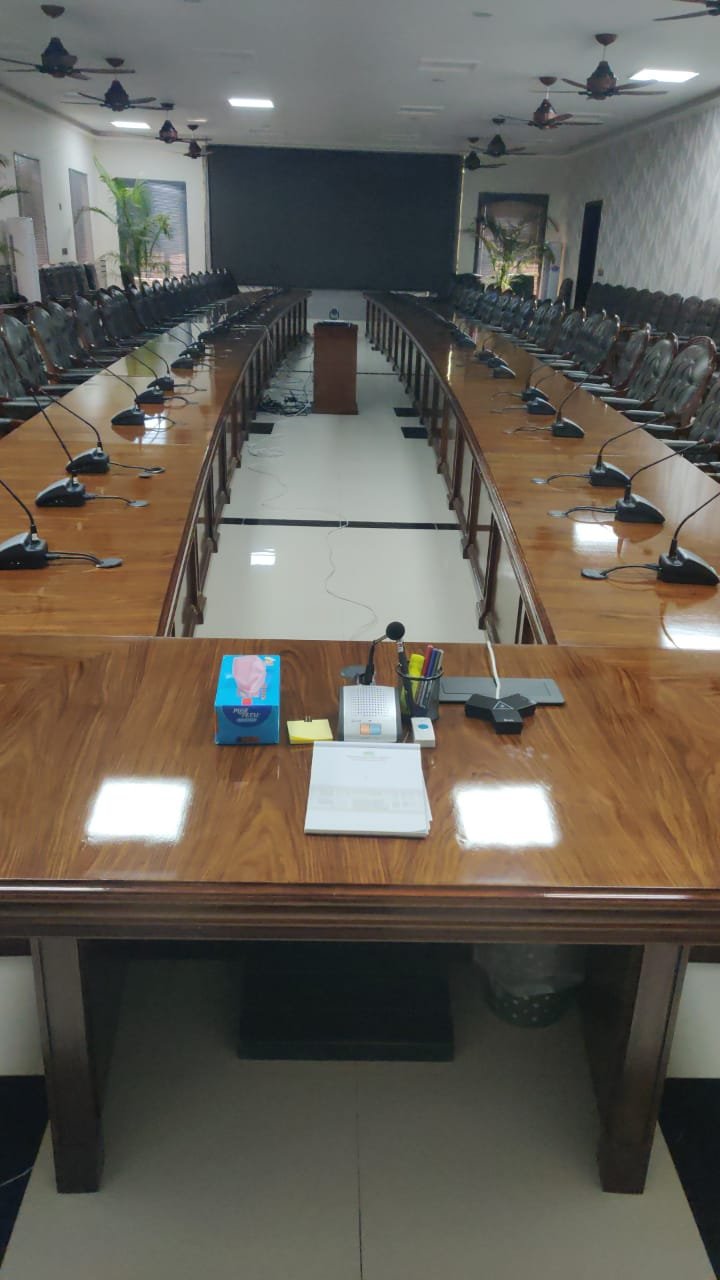
Government meeting rooms carry a specific kind of pressure that a typical corporate boardroom doesn’t always have — official proceedings, multiple stakeholders, and a genuine need for every participant to be heard clearly without repeating themselves. At the DCO Office in Faisalabad, this need led to the installation of a dedicated audio conference system, designed and configured by Smart One Technologies to deliver clear voice pickup and echo-free playback across a room used regularly for official meetings, briefings, and coordination sessions.
This case study walks through the reasoning behind the system’s specification, how the installation was carried out, and why getting conference audio right matters more in an institutional setting than most people realize until they’ve sat through a meeting where it’s done wrong.
Why This Audio Conference System Configuration Was Chosen
Meeting rooms in government offices typically host a mix of officials, visiting stakeholders, and support staff seated around a table or in a semi-formal arrangement, often with hard surfaces like tiled floors, glass, or wooden furniture that can create echo and reflection issues for audio. A poorly specified audio conference system in this kind of space often results in muffled voices from participants seated further from a single central microphone, or distracting feedback loops when multiple mics are active simultaneously.
To address this, the system for the DCO Office was built around multiple conference microphones positioned to cover the full seating arrangement, paired with a digital signal processor (DSP) handling automatic echo cancellation and noise suppression. This combination allows several participants to speak naturally, even in quick succession, without the system struggling to isolate individual voices or introducing audible artifacts.
Technical Specifications of the Installed Audio Conference System
| Component | Detail |
| Microphones | Multiple conference/gooseneck microphones covering full table seating |
| Signal Processing | Digital Signal Processor (DSP) with echo and noise cancellation |
| Speakers | Ceiling or table-mounted speakers for even audio coverage |
| Control | Centralized control unit for volume and mic management |
| Integration | Compatible with video conferencing equipment for hybrid meetings |
| Operation | Simple, staff-operable controls requiring no technical training |
Every component in this audio conference system was selected for reliable daily use by office staff rather than requiring a dedicated AV technician to operate the room for routine meetings.
The Installation Process
1. Room Acoustics Assessment
Before any equipment was installed, the Smart One Technologies team assessed the meeting room’s acoustics, seating layout, and existing surfaces to identify potential echo or reflection issues that the audio conference system would need to compensate for.
2. Microphone Placement Planning
Microphone positions were planned to ensure even voice pickup across the full seating arrangement, avoiding both dead zones where a speaker’s voice might be under-captured and overlap zones that could cause feedback.
3. Cabling and Equipment Installation
Cabling was routed discreetly to keep the room’s professional appearance intact, with the DSP unit and control equipment installed in a location accessible for maintenance but out of the way of daily meeting activity.
4. Calibration and Echo Testing
Once installed, the system was calibrated and tested under real meeting conditions, adjusting microphone sensitivity and speaker output to eliminate echo and ensure consistent volume across the room.
5. Staff Training and Handover
Office staff were walked through the system’s basic controls, ensuring the audio conference system could be operated confidently for day-to-day meetings without requiring external support for routine use.
Challenges and Solutions
- Hard, reflective room surfaces: Addressed through DSP-based echo cancellation tuned specifically to the room’s acoustic profile during calibration.
- Multiple participants speaking at varying distances: Solved through strategic multi-microphone placement covering the full seating layout evenly.
- Maintaining a professional room appearance: Managed through discreet cabling and equipment placement that kept the audio conference system visually unobtrusive.
- Ensuring staff could operate the system independently: Resolved through a simplified control setup and hands-on training during handover.
Performance After Installation
Since going live, the audio conference system at the DCO Office has noticeably improved the clarity and flow of meetings, with participants no longer needing to repeat themselves or lean toward a central microphone to be heard. The echo cancellation has proven particularly effective in reducing the reverberation the room previously experienced during larger meetings with multiple simultaneous speakers.
For an office where clear communication during official proceedings is essential, a properly configured audio conference system removes a source of friction that’s easy to overlook until it’s fixed.
Why Government and Institutional Offices Need a Dedicated Audio Conference System
Across Pakistan, government offices and institutional facilities are increasingly investing in a proper audio conference system rather than relying on a single standalone speakerphone or ad-hoc microphone setup. The reasons are practical: official meetings often involve multiple stakeholders, require accurate communication without misheard details, and increasingly need to support hybrid formats where some participants join remotely through video conferencing.
Offices evaluating a similar upgrade can explore the Audio Systems range, along with Video Conference Equipment for offices needing to support hybrid or remote participation alongside in-room audio.
Why This Project Reflects Real Experience and Expertise
Configuring an audio conference system correctly for a specific room isn’t a matter of installing equipment and switching it on — it requires understanding how sound behaves in that particular space and adjusting the setup accordingly. Smart One Technologies, operating in Pakistan since 2005, applied the same room-assessment-first approach used across its institutional projects to the DCO Office installation, treating microphone placement and DSP calibration as decisions specific to this room’s acoustics rather than a standard package applied regardless of environment.
Organizations considering a similar setup can learn more about the company’s background on the About page, review other completed work on the Our Projects page, or reach out through the Contact page to discuss a project.
Maintenance and Long-Term Support
An audio conference system used regularly for official meetings needs periodic attention to keep performing reliably. Smart One Technologies’ support arrangement for this installation includes periodic system checks, firmware updates for the DSP unit, and prompt response for any microphone or speaker faults, ensuring the room doesn’t lose audio clarity during an important meeting due to an unaddressed technical issue.
The Impact of Reliable Audio on Official Proceedings
It’s easy to underestimate how much a poor audio conference system costs an office in time and clarity until it’s replaced with a properly configured one. Before this installation, meetings at the DCO Office occasionally required participants to repeat statements, lean toward a single microphone, or ask for points to be clarified simply because they weren’t heard correctly the first time. In an official setting, these small frictions add up — extending meeting length, occasionally causing miscommunication on important details, and creating an impression of the room itself being poorly equipped for serious proceedings.
With the new system in place, discussions move more naturally, and the room can comfortably accommodate meetings involving a larger number of participants without audio quality becoming a limiting factor. This kind of improvement rarely gets discussed as a major upgrade, but its effect on day-to-day efficiency is immediate and consistently noticeable to anyone who regularly used the room beforehand.
Common Mistakes Offices Make When Setting Up Meeting Room Audio
The DCO Office project also reflects a set of avoidable mistakes that many institutional buyers make when specifying an audio conference system without professional input:
- Relying on a single centralized microphone: This consistently under-serves participants seated further away, regardless of how sensitive the microphone is rated to be.
- Ignoring room acoustics entirely: Hard surfaces and reflective materials cause echo problems that no amount of microphone quality alone can fix without proper DSP tuning.
- Choosing consumer-grade speakerphones for larger rooms: These are designed for small huddle spaces and typically struggle to cover a full-size meeting room evenly.
- Overlooking future hybrid meeting needs: Installing audio equipment that can’t integrate with video conferencing tools often means a costly second upgrade later.
Avoiding these mistakes is exactly why a proper site assessment, rather than a generic equipment purchase, made the difference in how well this installation performs in daily use.
Frequently Asked Questions
What is an audio conference system?
An audio conference system is a setup of microphones, speakers, and signal processing equipment designed to capture and distribute clear voice audio during meetings, allowing multiple participants to communicate without echo, feedback, or inconsistent volume.
Why does a meeting room need multiple microphones instead of one?
A single centralized microphone often fails to capture voices evenly across a full table, especially in larger rooms. Multiple microphones positioned strategically ensure consistent voice pickup regardless of where a participant is seated.
How does an audio conference system prevent echo?
Echo cancellation is handled by a digital signal processor (DSP) that identifies and removes feedback loops and reverberation in real time, allowing clear, natural-sounding audio even in rooms with hard, reflective surfaces.
Can an audio conference system work with video conferencing equipment?
Yes. A properly configured audio conference system can integrate with video conferencing hardware, supporting hybrid meetings where some participants join remotely while others are present in the room.
Is an audio conference system difficult for office staff to operate?
Not when configured correctly. A well-designed system, like the one installed at the DCO Office, uses simplified controls that allow staff to manage volume and microphones without technical training or ongoing external support.
What’s the most common mistake offices make with meeting room audio?
Relying on a single centralized microphone or a small consumer-grade speakerphone is the most common issue, since these solutions typically fail to cover a full-size meeting room evenly, leaving participants seated further away poorly heard.
Final Thoughts
The audio conference system installed at the DCO Office, Faisalabad demonstrates how much a properly specified setup can improve the day-to-day experience of official meetings. Clear voice pickup, effective echo cancellation, and simple staff-operable controls together remove a friction point that’s easy to underestimate until a meeting runs smoothly for the first time in a long while. This same room-specific, acoustics-first approach is what Smart One Technologies applies to every audio conference system project across Pakistan’s institutional and government offices.
| Need a Reliable Audio Conference System for Your Office?
Smart One Technologies designs and installs audio conference systems for government and institutional offices across Pakistan. Get a free consultation and quote today. 📞 +92 321 408 6763 | ✉ sales@sot.com.pk | www.sot.com.pk |

0 Comments on “Audio Conference System Setup at DCO Office, Faisalabad”