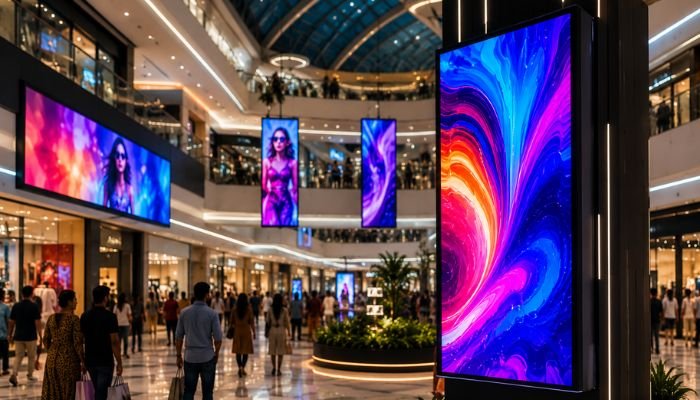
Walk into any of Karachi’s top shopping malls today — Dolmen Mall Clifton, Ocean Mall, Packages Mall, or Lucky One — and the first thing that hits you is not the stores or the products. It is the screens. Massive, vivid, motion-filled LED displays command attention from every key vantage point: the main entrance facade, the central atrium, the food court ceiling, the escalator walls, the corridors leading to anchor tenants. These are SMD screens, and they are rewriting the rules of retail in Pakistan’s largest consumer market.
The transformation is not cosmetic. SMD screens are changing how Karachi’s shopping malls attract footfall, how brands communicate with shoppers, how mall operators monetise their advertising inventory, and how the entire in-mall experience feels to the millions of consumers who visit these retail destinations every month. Understanding how and why this transformation is happening is essential for any retail property owner, brand manager, or marketing professional operating in Pakistan’s commercial landscape in 2026.
At Smart One Technologies we have been supplying and installing indoor and outdoor SMD screens for retail, commercial, and institutional clients across Pakistan since 2005. In this article, we break down exactly how SMD screens are transforming the retail experience in Karachi’s shopping malls — and what this means for businesses looking to stay ahead of the curve.
The Retail Challenge Karachi’s Malls Were Facing
Karachi is Pakistan’s economic engine. With a population of over 15 million and a growing middle class with real disposable income, the city’s retail sector has enormous potential. But potential and performance are different things. Over the past several years, Karachi’s shopping mall operators were grappling with a challenge that is familiar to retail property managers around the world: how do you keep a physical destination relevant and compelling when consumers have more options for entertainment, discovery, and shopping than ever before?
Digital commerce, social media, and shifting consumer habits were all pulling attention away from physical retail. Footfall at malls with outdated environments was declining. Retailers were demanding better marketing support from mall operators. Brand tenants wanted more flexibility in how they communicated with shoppers. And the advertising infrastructure in most malls — static lightboxes, printed banners, aging LCD panel networks — was simply not capable of delivering the dynamic, high-impact visual environment that modern consumers expect.
SMD screens entered this equation not as a luxury upgrade but as a strategic solution. They gave mall operators the tool they needed to compete — for attention, for footfall, for advertising revenue, and for the tenant satisfaction scores that determine lease renewals and premium rates.
► Karachi’s leading shopping malls are not just installing SMD screens to look modern. They are using them to fundamentally change the economics of their advertising inventory and the quality of the shopper experience.
What SMD Screens Bring to the Retail Environment
Before examining the specific ways SMD screens are transforming Karachi’s retail malls, it is worth clarifying what makes this technology genuinely different from what came before. The comparison below illustrates why the switch from traditional display formats to SMD is not an incremental upgrade — it is a category change.
| Feature | Traditional LCD/Lightbox | SMD Screen |
| Brightness | 300–600 nits | 4,000–8,000 nits |
| Content Updates | Manual reprint | Remote / instant |
| Motion & Video | Not possible | Full HD / 4K video |
| Viewing Angle | Limited | 160–178 degrees |
| Lifespan | 2–4 years typical | 10+ years LED rated |
| Energy Efficiency | Higher power draw | Low-energy LED tech |
| Multi-ad Capability | One ad at a time | Rotating ad slots |
Every row of this comparison represents a meaningful operational or commercial improvement. Together, they add up to a retail display infrastructure that is more impactful, more flexible, more durable, and more financially productive than anything that preceded it in the Pakistani retail environment.
Six Ways SMD Screens Are Transforming Retail in Karachi’s Shopping Malls
1. Creating a First Impression That Shoppers Remember
The entrance experience of a shopping mall is the single most important moment in shaping a visitor’s emotional state and expectations. A shopper who walks through a grand entrance corridor lined with vivid, high-resolution SMD screens playing dynamic content — fashion campaigns, food promotions, event announcements, entertainment teasers — arrives in a state of engagement and anticipation. A shopper who enters through a corridor of faded lightboxes and outdated static banners arrives in a state of indifference.
Karachi’s premium malls have invested heavily in SMD facade and entrance installations precisely because they understand this dynamic. The entrance experience sets the tone for dwell time, spending, and the likelihood of a return visit. A compelling visual environment at the entrance communicates that this is a premium destination — and premium destinations attract premium brands and premium consumers.
2. Turning Atrium Space Into a Revenue-Generating Asset
The central atrium is the heart of any major shopping mall. It is the space where shoppers pause, where footfall peaks, where every visitor passes multiple times during their visit. Traditionally, atrium space generated revenue through tenant kiosks and sponsorship banners — static, single-advertiser formats with limited flexibility.
Large-format SMD screens installed in the atrium transform this space into a dynamic advertising platform. A single large SMD installation can host multiple advertisers in rotation throughout the day, display event information, broadcast live feeds during special occasions, and create immersive visual experiences that make the atrium a destination in itself — not just a transit space. Mall operators in Karachi report that atrium SMD installations significantly increase dwell time in the central space, which directly increases exposure to surrounding retail tenants and food and beverage outlets.
3. Enabling Brand Tenants to Run Truly Dynamic Campaigns
One of the most significant frustrations for brand tenants in traditional mall environments has been the inflexibility of static advertising formats. A fashion brand launching a new collection needs to communicate urgency, aspiration, and movement — qualities that a printed lightbox simply cannot convey. A restaurant chain promoting a lunch special needs to activate that message at 11:30am and pull it at 2:30pm — something that is operationally impossible with physical print formats.
SMD screens change this completely. Brand tenants can schedule content with precision — different creative in the morning versus the evening, campaign-specific messaging aligned with social media launches, real-time price promotions, or event-driven content that responds to what is happening in the mall and in the broader market. This creative flexibility transforms the mall advertising proposition from a commodity to a genuine marketing tool that brand tenants actively value and compete for.
4. Powering the Food Court Experience
Karachi’s mall food courts are among the most competitive retail environments in the city. Dozens of food and beverage operators compete for the attention of hungry shoppers in a high-footfall, visually noisy environment. In this context, SMD screens are not just advertising tools — they are part of the service experience.
Digital menu boards powered by SMD technology allow food operators to update pricing instantly, highlight daily specials, promote combo deals, and create appetite-stimulating visual content that drives incremental purchases. Overhead SMD installations in the food court create a visual ambiance — live content, event announcements, themed seasonal displays — that makes the dining experience more engaging and encourages longer dwell times. For mall operators, longer food court dwell times translate directly into higher per-visitor spending and stronger overall revenue performance.
5. Supporting Mall Events and Experiential Retail
Karachi’s successful malls have understood that physical retail destinations need to offer more than shopping — they need to offer experiences that cannot be replicated online. Events, exhibitions, brand activations, cultural celebrations, and entertainment programming all require a visual infrastructure that can adapt and amplify the event environment.
SMD screens are the backbone of this experiential infrastructure. During Eid festivals, SMD displays can transform a mall’s visual environment with themed content across every screen simultaneously. During brand activations, screens can broadcast live social media feeds, countdown timers, and user-generated content. During fashion shows or entertainment events held in the atrium, SMD walls create a production-quality backdrop that elevates the event from a casual gathering to a premium branded experience. This event capability is increasingly cited by Karachi’s mall operators as a key competitive advantage over rival retail destinations.
6. Generating Significant New Revenue Streams for Mall Operators
Perhaps the most compelling transformation that SMD screens enable is purely financial. Traditional mall advertising inventory — static lightboxes, printed banners, the occasional LCD screen — generated modest revenue at fixed rates for fixed periods. The economics were constrained by the single-advertiser, fixed-format nature of the product.
An SMD screen network fundamentally changes these economics. Each screen location becomes a multi-advertiser, time-slotted inventory unit. A single prominent atrium screen can host eight to twelve advertiser slots in a daily rotation. Content can be priced by daypart — peak weekend rates, weekday afternoon rates, early morning rates — creating yield management opportunities that are familiar in broadcast media but entirely new in mall advertising. Mall operators across Karachi who have made the transition to SMD networks report that advertising revenue from the same physical locations has increased by three to five times compared to equivalent static inventory.
The Investment Case: ROI Across Different Mall Zones
Understanding the financial case for SMD installation requires looking at the specific revenue potential across different zones within a typical Karachi shopping mall. The table below provides realistic estimates based on current market rates and typical installation configurations:
| Mall Zone | Typical Screen Size | Ad Revenue/Month (Est.) | Payback Period |
| Main Entrance Facade | P6 Outdoor, 10–20sqm | PKR 150,000–300,000 | 12–18 months |
| Central Atrium | P3 Indoor, 6–12sqm | PKR 80,000–180,000 | 18–24 months |
| Food Court | P2.5 Indoor, 4–8sqm | PKR 50,000–120,000 | 20–30 months |
| Corridor / Walkway | P4 Indoor, 3–6sqm | PKR 30,000–80,000 | 24–36 months |
These estimates reflect conservative assumptions about occupancy rates and pricing. In premium Karachi mall locations with strong footfall and active advertiser demand, returns can be significantly higher. The key insight is that SMD screen investments in retail environments are not cost centres — they are revenue-generating infrastructure with measurable payback periods and improving economics over time as the network matures and advertiser demand grows.
► Mall operators who view SMD screen investment as a capital expense are missing the point. These systems are revenue infrastructure — and the most successful Karachi mall operators are managing them with the same commercial discipline as any other profit centre.
Technical Specifications That Matter for Retail Mall Environments
Not all SMD screens are appropriate for all retail environments, and selecting the right specifications is critical to getting the performance and economics right. Here are the key technical considerations for shopping mall installations in Karachi:
Pixel Pitch Selection by Zone
Pixel pitch — the distance between individual LED clusters — determines the minimum comfortable viewing distance for clear image resolution. For Karachi mall installations:
- 5 to P2 — Close-range retail displays, wayfinding panels, and in-store brand walls where viewers are within 1.5 to 3 metres
- 5 to P3 — Indoor atrium, corridor, and food court installations with typical viewing distances of 3 to 8 metres
- P4 to P6 — Larger atrium anchor screens and indoor facade installations viewed from 8 to 20 metres
- P6 to P10 — Semi-outdoor entrance canopies and covered exterior facades with longer viewing distances
Brightness for Indoor Retail Environments
Indoor mall environments present a unique brightness challenge. While they do not need the extreme brightness required for direct sunlight outdoor installations, Karachi’s malls are well-lit retail environments with significant ambient light from ceiling fixtures, natural light from skylights and glass facades, and competing visual stimuli from illuminated store fronts. A minimum of 800 nits is recommended for standard indoor mall installations; 1,200 to 2,000 nits for locations with significant natural light exposure.
Refresh Rate for Video and Animation Content
Mall advertising increasingly relies on motion content — video brand campaigns, animated product showcases, dynamic event visuals. A refresh rate of at least 1,920 Hz is recommended for retail SMD installations to ensure smooth motion reproduction without flicker, which is particularly important for content captured on camera during events or social media recording by shoppers.
Cabinet Design for Interior Aesthetics
In premium retail environments, the physical appearance of the SMD screen installation matters as much as the display performance. Ultra-slim cabinet designs with seamless panel connections, clean mounting systems, and minimal visible bezels deliver a premium aesthetic that is appropriate for Karachi’s high-end mall environments. Smart One Technologies works with mall developers and interior designers from project inception to ensure that SMD screen installations integrate seamlessly with the architectural vision of the retail space.
Content Management: The Engine Behind the Transformation
An SMD screen network is only as powerful as its content management capability. The most impressive hardware in the world delivers disappointing results if the content running on it is outdated, poorly designed, or unresponsive to the commercial rhythm of the mall environment. Effective content management for Karachi mall SMD networks requires:
- A centralised CMS that manages all screens across the mall from a single dashboard — with the ability to schedule, push, and update content remotely in real time
- Daypart scheduling that automates content changes based on time of day and day of week — morning commuter traffic, lunchtime food court peak, evening family footfall, weekend entertainment audiences all warrant different content strategies
- Advertiser self-service portals that allow brand tenants and external advertisers to upload approved content, book slots, and monitor delivery — reducing the operational load on mall staff
- Emergency override capability to display safety, security, or operational announcements across all screens simultaneously
- Analytics reporting that tracks content play counts, daypart delivery, and screen uptime — providing advertisers with the proof-of-performance data they increasingly demand
Smart One Technologies configures and commissions the full CMS infrastructure as part of every major mall SMD installation, and provides training for mall operations and commercial teams to manage the network confidently from day one.
Smart One Technologies: SMD Screen Partner for Karachi’s Retail Sector
Smart One Technologies has been the trusted AV and display solutions partner for commercial and institutional clients across Pakistan since 2005. Our SMD screen portfolio covers the full range of retail applications — from single in-store brand walls to complete multi-zone mall-wide networks — and our end-to-end service model ensures that every installation delivers the commercial and operational performance our clients need.
Our retail SMD screen service includes:
- Site survey and zone-by-zone specification development — ensuring the right pixel pitch, brightness, and cabinet specification for each installation location
- Structural and electrical assessment to confirm mounting feasibility and power infrastructure requirements
- Full supply and installation with seamless project management from contract to commissioning
- Content management system setup, configuration, and staff training
- Annual Maintenance Contracts covering preventive maintenance, performance monitoring, and priority fault response
- Nationwide coverage — Karachi, Lahore, Islamabad, Rawalpindi, Faisalabad, Multan, and all major cities
Whether you are planning a new mall development, upgrading an existing retail property, or looking to add SMD screen capability to a specific zone within your retail estate, Smart One Technologies has the experience and technical capability to deliver. Contact us at sot.com.pk for a consultation and project quotation.
Frequently Asked Questions About SMD Screens in Shopping Malls
What pixel pitch is best for a shopping mall atrium SMD screen in Karachi?
For a central atrium installation in a typical Karachi shopping mall with viewing distances of 5 to 15 metres, a P3 to P4 pixel pitch delivers the optimal balance of visual quality and cost efficiency. For larger atria with longer viewing distances of 15 metres or more, P5 to P6 is appropriate. Smart One Technologies conducts a site-specific viewing distance analysis as part of every installation proposal to ensure the correct specification is selected.
How long does it take to install an SMD screen network in a shopping mall?
Installation timelines depend on the scale and complexity of the network. A single atrium or facade screen typically takes three to seven days from delivery to commissioning. A complete mall-wide multi-zone SMD network can take three to eight weeks, including structural preparation, electrical work, panel installation, CMS configuration, and staff training. Smart One Technologies develops a detailed project schedule for every installation and coordinates closely with mall operations teams to minimise disruption to trading.
Can existing mall advertising spaces be retrofitted with SMD screens?
Yes — in most cases, existing lightbox frames, LCD panel locations, and banner positions can be retrofitted to accommodate SMD screen installations. The structural requirements for SMD panels are generally manageable within existing infrastructure, though electrical capacity may need to be assessed and upgraded in older properties. Smart One Technologies conducts a full structural and electrical survey as part of the project scoping process to identify any upgrade requirements before installation commences.
How is the SMD advertising inventory sold and managed for a mall network?
Mall SMD advertising inventory is typically managed through a centralised CMS with advertiser booking and scheduling functionality. Inventory can be sold as daypart slots, weekly packages, event-specific sponsorships, or long-term tenancy agreements. Some mall operators manage the advertising sales function in-house; others partner with an outdoor media sales specialist to maximise revenue. Smart One Technologies configures the CMS to support whichever commercial model the mall operator chooses, including reporting tools for advertiser proof-of-performance.
Does Smart One Technologies offer SMD screen installation outside Karachi?
Yes. Smart One Technologies supplies and installs SMD screens across Pakistan including Lahore, Islamabad, Rawalpindi, Faisalabad, Multan, Peshawar, and all major cities. We have completed retail, commercial, and institutional SMD installations in multiple provinces and have the logistics and technical infrastructure to manage projects nationwide. Contact us at sot.com.pk for availability and quotation for your specific location.
Final Thoughts — The Digital Retail Environment Is Here
The transformation of Karachi’s shopping malls by SMD screen technology is not a future trend — it is a present reality. The malls that have invested in comprehensive SMD screen infrastructure are already seeing the results: higher footfall, stronger tenant satisfaction, significantly increased advertising revenue, and a physical environment that gives them a genuine competitive advantage over retail destinations that have not yet made the investment.
For mall operators, retail developers, and brand tenants in Karachi and across Pakistan, the question is no longer whether SMD screens make sense in shopping malls. The evidence on that is clear. The question is how to implement the right solution — the right pixel pitch, the right brightness, the right zones, the right content management infrastructure — to maximise the commercial return from every screen installed.
Smart One Technologies is here to answer that question with two decades of experience, a proven track record in Pakistan’s most demanding retail environments, and an end-to-end service model that takes responsibility for the outcome, not just the installation. Contact us at sot.com.pk to begin planning your retail SMD screen project.
Smart One Technologies | www.sot.com.pk | SMD Screens, Smart Boards & AV Solutions
0 Comments on “How SMD Screens Are Transforming Retail in Karachi’s Shopping Malls”