
| TL;DR — Quick Answer
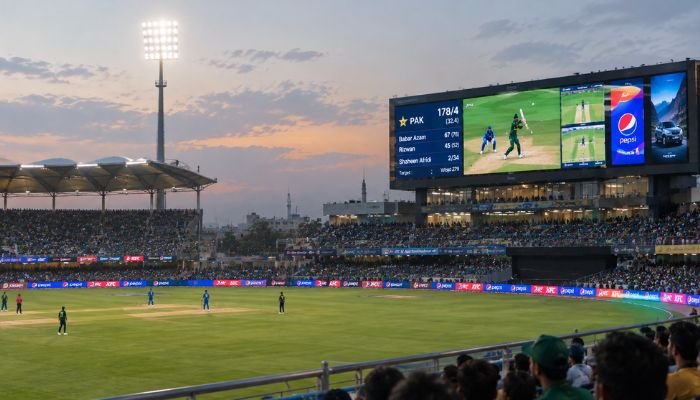
A stadium doesn’t need one SMD Screen — it needs three distinct systems working together, each with different technical requirements. The scoreboard panel needs precise integration with electronic timing systems, high legibility from the furthest seats, and rock-solid uptime since a frozen score is unacceptable mid-match. The replay or big screen needs broadcast-compatible refresh rates so camera footage doesn’t flicker on television, along with fast video processing to switch between live feeds, graphics, and slow-motion replays without lag. The perimeter advertising panel needs sponsor content rotation software, broadcast-safe positioning so ads aren’t obstructed by players or officials, and often synchronization with match breaks so sponsor content changes at the right moments. Getting stadium SMD screens right in Pakistan’s cricket, football, and hockey venues means specifying each of these three systems separately rather than treating a stadium as one generic large display. Smart One Technologies designs complete stadium SMD screen ecosystems across Pakistan, engineering the scoreboard, replay, and advertising systems as an integrated whole rather than three unrelated purchases. |
Why a Stadium Needs Three Different SMD Screen Systems, Not One
It’s tempting to think of a stadium display as a single large SMD Screen showing whatever’s needed at the moment — score, replay, or an advertisement. In practice, professional stadium deployments in Pakistan’s cricket grounds, football venues, and hockey stadiums separate these functions into distinct panels because each one has genuinely different technical demands. A scoreboard needs to be perfectly legible and continuously accurate above almost everything else. A replay screen needs to handle fast-moving broadcast-quality video without visible artifacts. An advertising panel needs to run independently of match action, rotating sponsor content on a schedule that doesn’t interfere with play or the broadcast frame.
Treating all three as one generic screen usually means compromising on at least one function — a panel specified for advertising brightness and rotation software rarely has the refresh rate a broadcast replay needs, and a scoreboard optimized for legibility from the upper stands isn’t necessarily built for the fine detail a close-up player replay requires. Understanding these as three separate systems, even when housed on the same structure, is the starting point for a stadium SMD screen project that actually performs on match day.
Panel Type One: The Scoreboard System
Timing and Data Integration
A stadium scoreboard SMD Screen isn’t a standalone display — it needs a live data feed from the venue’s official timing and scoring system, whether that’s a cricket scoring platform tracking runs, wickets, and overs, or a football and hockey system tracking goals, cards, and match clock. This integration is the single most important technical requirement of a scoreboard panel, because a screen that requires manual updates during a live match is both slower and more error-prone than an automated feed.
Legibility From the Farthest Seat
Scoreboard content needs to remain readable from the most distant general-admission seating in the venue, which typically means a coarser pixel pitch than an advertising panel positioned closer to the crowd, paired with high brightness to stay legible under Pakistan’s intense daytime sun during afternoon matches. Our guide to pixel pitch selection for SMD screens covers how viewing distance should drive this specification for any large-format outdoor display, scoreboards included.
Uptime and Redundancy
A scoreboard that fails or freezes mid-match is a visible, embarrassing failure in front of a full stadium and often a television audience, so scoreboard systems typically justify a higher investment in redundant power and signal paths than a standard commercial SMD screen would need.
Panel Type Two: The Replay and Big Screen System
Broadcast-Compatible Refresh Rate
Anything shown on a stadium’s main replay screen risks being caught on camera by broadcast crews covering the match, and a display with an inadequate refresh rate will visibly flicker or show banding artifacts when filmed — a real problem for any screen that might appear in televised coverage. Higher-refresh-rate SMD panels, increasingly standard in professional stadium deployments, solve this specific issue. Our overview of current SMD screen technology trends covers how refresh rate specifications have moved substantially higher in recent years specifically to serve broadcast and content-creation use cases like this.
Fast Video Switching
The replay screen typically needs to move between multiple sources quickly and cleanly — a live camera feed, an instant replay, sponsor branding during a pause, and graphics overlays for statistics — which places real demand on the video processing and switching hardware behind the panel, not just the display itself.
Crowd Engagement Content
Beyond match footage, the big screen carries crowd camera segments, promotional content, and entertainment during breaks in play, all of which need to cut cleanly between sources without visible lag, since a stadium audience notices a sluggish transition far more than a television viewer would.
Panel Type Three: The Perimeter Advertising System
Sponsor Rotation and Ad Scheduling
Perimeter advertising panels run largely independently of match action, cycling through sponsor content on a scheduled rotation managed through dedicated content management software rather than manual switching. This system needs to support precise scheduling — certain sponsors may pay for premium slots during specific match moments, such as the changeover between overs in cricket or halftime in football.
Broadcast-Safe Positioning and Content
Advertising panels around the perimeter need to be positioned and specified with television broadcast framing in mind, since these boards are a genuine revenue stream for stadiums specifically because they appear in camera shots throughout the match. This means brightness, color accuracy, and even physical positioning relative to camera angles all factor into the specification in a way that doesn’t apply to a typical roadside advertising SMD screen. Our guide to choosing the best outdoor SMD screen for advertising covers general outdoor advertising specification, though stadium perimeter boards carry additional broadcast-visibility requirements beyond a standard billboard.
Revenue and Sponsorship Value
For many stadiums, perimeter SMD advertising is a direct revenue source, and the reliability and content-management sophistication of this system has a direct commercial impact — a sponsor who paid for guaranteed airtime during a specific match segment expects that content to display exactly as scheduled.
How the Three Systems Work Together on Match Day
A well-designed stadium SMD screen deployment coordinates all three panels from a central production or control room, where an operator or automated system manages what each screen shows relative to live match events. During active play, the scoreboard runs continuously from the timing feed, the replay screen stays ready for the next instant replay or camera cut, and perimeter boards rotate sponsor content. During a break — an over change, a goal celebration, halftime — the coordination shifts: the replay screen might show a slow-motion highlight, while perimeter boards may switch to a premium sponsor slot timed to the pause. This kind of coordinated operation depends on the underlying systems being properly integrated from the design stage, not connected together as an afterthought once each screen is already installed.
Specifying Stadium SMD Screens for Pakistan’s Climate and Venues
- Brightness needs to handle direct sunlight during day matches without becoming a distraction under floodlights during evening fixtures, which is a wider brightness range than most commercial outdoor applications need to cover.
- IP rating of IP65 or higher is standard for any stadium-facing panel exposed to monsoon rain, dust, and the general wear of an open-air venue.
- Pixel pitch should vary by panel type and viewing distance — a coarser pitch for scoreboards visible from distant general seating, a finer pitch for replay screens and premium-enclosure-facing panels viewed from closer range.
- Structural mounting for large stadium screens needs the same load and wind-resistance engineering discussed in facade-mounted installations, since stadium screens are frequently among the largest single SMD structures in a city and carry significant wind load across their exposed surface area.
- Impact resistance matters specifically for stadium environments, where a ball, equipment, or crowd contact is a realistic risk that a shopping mall facade screen doesn’t need to plan for.
Common Mistakes in Stadium SMD Screen Projects
- Treating scoreboard, replay, and advertising as one generic screen spec: Each system has different priorities, and a single compromise specification usually under-serves at least one function.
- Underestimating broadcast refresh rate requirements: A panel that looks fine to a stadium crowd in person can flicker badly on television if the refresh rate wasn’t specified for camera capture.
- Skipping timing system integration planning: A scoreboard that can’t pull data automatically from the official scoring system becomes a manual, error-prone bottleneck during live play.
- Ignoring wind load on large stadium structures: Stadium screens are often among the largest SMD installations in the region, and the structural engineering behind them deserves the same rigor as any major facade-mounted display.
- No sponsor content scheduling system: Manually managed advertising rotation doesn’t scale to the precise, revenue-linked scheduling that stadium sponsorship deals typically require.
Why Stadium and Sports Venue Clients in Pakistan Work With Smart One Technologies
Smart One Technologies designs complete stadium SMD screen ecosystems across Pakistan’s cricket, football, and hockey venues, engineering the scoreboard, replay, and advertising systems together rather than as separate purchases. Our team specifies each panel type for its specific technical requirements — timing integration for scoreboards, broadcast-compatible refresh rates for replay screens, and sponsor scheduling software for advertising boards — while managing the structural and electrical engineering that large stadium installations demand. For a broader look at how these requirements compare across other high-demand sectors, our guide to custom SMD screen solutions for every industry in Pakistan covers stadium deployment alongside banking, healthcare, and hospitality applications, while our advice on avoiding common mistakes when buying an SMD screen applies directly to the specification decisions covered here.
Frequently Asked Questions
Why does a stadium need separate scoreboard, replay, and advertising screens?
Each panel type has different technical priorities — the scoreboard needs precise timing integration and long-distance legibility, the replay screen needs broadcast-compatible refresh rates, and the advertising panel needs sponsor scheduling software — so specifying them as one generic screen usually compromises at least one function.
What refresh rate does a stadium replay screen need for broadcast?
Stadium replay and big screens increasingly use high-refresh-rate SMD panels to avoid visible flicker or banding when captured by broadcast cameras, a requirement that’s become more prominent as stadium coverage and content creation around live sports has grown.
How does a stadium scoreboard get its live score data?
A scoreboard SMD screen typically integrates with the venue’s official timing and scoring system through a direct data feed, allowing scores, overs, goals, or match clock information to update automatically rather than requiring manual entry during play.
What IP rating do outdoor stadium SMD screens need in Pakistan?
IP65 or higher is standard for stadium-facing panels, given exposure to monsoon rain, dust, and general open-air wear across Pakistan’s cricket, football, and hockey venues.
Can perimeter advertising panels be scheduled for specific match moments?
Yes, dedicated content management software can schedule sponsor content for premium slots such as over changes, halftime, or goal celebrations, which is standard practice for stadiums that treat perimeter SMD advertising as a direct revenue stream.
Who designs complete stadium SMD screen systems in Pakistan?
Sports venues typically work with an experienced integrator such as Smart One Technologies, which engineers the scoreboard, replay, and advertising systems as one coordinated ecosystem rather than installing each panel separately.
Final Thoughts
A stadium SMD screen deployment succeeds when it’s treated as three coordinated systems rather than one large display. The scoreboard’s job is accuracy and legibility, the replay screen’s job is broadcast-quality video handling, and the advertising panel’s job is reliable, scheduled sponsor content — and each deserves a specification built around its actual function rather than a single generic panel stretched across three roles. Venues that plan the structural engineering, timing integration, and content management together from the start end up with a stadium display system that performs reliably in front of a full crowd and a television audience alike.
| Planning an SMD Screen System for a Stadium or Sports Venue in Pakistan?
Get a consultation on scoreboard, replay, and advertising panel specification built around your venue’s structure, sport, and broadcast requirements from Smart One Technologies. |

0 Comments on “SMD Screen for Sports Stadiums in Pakistan: Scoreboard, Replay, and Advertising Panels”