
| TL;DR — Quick Answer
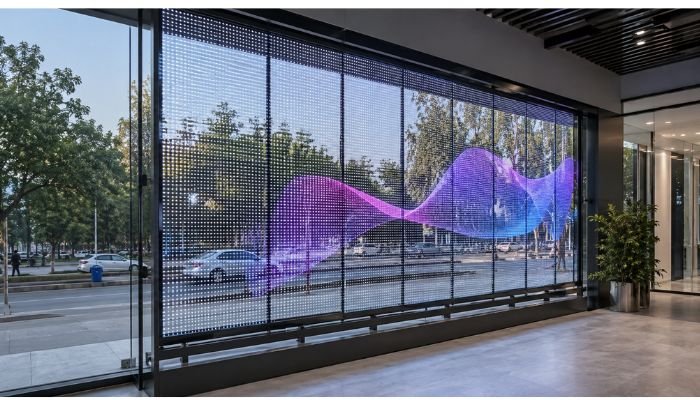
Transparent SMD screens are LED displays built with gaps between the diodes, allowing roughly 50 to 80 percent of light to pass through depending on the specific panel, so they can be mounted directly onto glass storefronts, showroom windows, or partitions without blocking the view behind them. Unlike a standard SMD screen with a solid backing, a transparent panel lets a car in a showroom, products on a shelf, or daylight itself remain visible while vivid digital content plays over it. In Pakistan, retail storefronts, automotive showrooms, banking halls, and corporate lobbies are the fastest-growing adopters of this technology. Smart One Technologies supplies and installs transparent SMD screens for commercial spaces across Pakistan, matching transparency rate, brightness, and mounting method to each glass installation’s specific requirements. |
Walk past a high-end showroom or a modern retail storefront in Lahore or Karachi today, and you might notice something unusual: glowing digital content playing directly on the glass itself, with the car or products behind it still fully visible. This is the effect transparent SMD screens create — LED technology built with deliberate gaps between the diodes, letting light and the view behind the panel pass through while still displaying bright, vivid content on the surface. It’s a genuinely different category from a standard SMD screen, and it’s becoming one of the more visually striking display options available to Pakistani businesses.
This guide covers how transparent SMD screen technology actually works, what specifications matter when evaluating one, where it’s being used across Pakistan, and what to consider before installing one on a storefront or showroom.
What Are Transparent SMD Screens?
A transparent SMD screen is an LED display built with a see-through structure rather than the solid, opaque backing found on a standard SMD panel. Individual LED diodes are mounted onto a transparent or semi-transparent substrate, spaced with visible gaps between them, allowing a portion of ambient light and the view behind the screen to pass through while the diodes themselves still produce a bright, legible image. The result is a display that can sit directly on glass without turning a shopfront window into a solid, light-blocking wall.
How Transparent SMD Screen Technology Actually Works
The transparency comes from the physical spacing of the LED strips themselves. Rather than densely packing diodes across a solid panel, transparent screens use thin LED strips mounted with open space between them, typically arranged in a grid pattern. Because human eyes blend the lit diodes and the visible gaps together at a normal viewing distance, the result reads as a coherent image, even though a significant portion of the panel’s actual surface area is open space rather than solid LED material.
Transparency Rate, Brightness, and Pixel Pitch Explained
| Specification | Typical Range | What It Affects |
| Transparency Rate | 50% – 80%, depending on panel design | How clearly the view behind the screen remains visible |
| Brightness | 800 – 4,500+ nits | Visibility against daylight through the glass it’s mounted on |
| Pixel Pitch | P3.9/7.8 and similar wide-format ratios | Image clarity at typical storefront viewing distances |
| IP Rating | IP65 front, lower rating at rear (indoor-facing) | Suitability for glass-mounted installations exposed to weather on one side |
Transparency rate and brightness work against each other to some degree — a higher transparency percentage means less physical LED surface area, which can limit maximum brightness compared to an equivalent solid panel. For most retail glass installations, a transparent SMD screen in the 50–70% transparency range paired with adequate brightness for the specific lighting conditions offers a practical balance between visual clarity and see-through effect.
Where Transparent SMD Screens Are Being Used in Pakistan
- Retail storefronts: Glass shopfronts displaying promotional content while keeping window displays and products visible from outside.
- Automotive showrooms: Vehicles remain fully visible through the glass while branding, pricing, and promotional video plays over the display.
- Banking halls and corporate lobbies: Glass partitions and entrance windows used for branding and information display without blocking natural light or sightlines.
- High-end hospitality and retail architecture: Feature installations where the see-through effect itself becomes part of the interior design statement.
Benefits of Transparent SMD Screens Over Traditional Displays
- Preserves natural light and sightlines: Unlike a solid screen or printed vinyl covering, a transparent panel doesn’t turn a window into a blocked wall.
- Distinctive visual impact: The see-through effect draws attention specifically because it looks unlike conventional signage or standard digital displays.
- Flexible content: Like any SMD screen, content can be updated remotely and changed as often as needed, unlike static window graphics.
- Doesn’t compromise the physical display behind it: Showroom vehicles or retail products remain the actual focal point, with digital content layered as an enhancement rather than a replacement.
Transparent vs Standard SMD Screens: Key Differences
| Factor | Standard SMD Screen | Transparent SMD Screen |
| Backing | Solid, opaque cabinet | Open, see-through structure |
| Best Use Case | General advertising, video walls | Glass storefronts, showroom windows, partitions |
| Brightness at Equivalent Size | Generally higher | Somewhat lower due to reduced LED surface area |
| Installation Method | Wall or structural mounting | Direct glass mounting or dedicated glass-facing frame |
Cost Considerations for Transparent SMD Screens
Transparent SMD screen technology generally carries a higher cost per square meter than a standard opaque panel, reflecting the more complex manufacturing process needed to build a see-through LED structure while maintaining adequate brightness. Buyers evaluating this technology should factor in not just the panel cost, but also glass-specific mounting hardware, which differs from a standard wall-mounted installation, and potentially a structural glass assessment if the storefront glazing wasn’t originally designed to support additional mounted weight.
As with any specialized display technology, getting an itemized quote based on the actual installation site remains far more reliable than estimating cost from a generic online price range, since transparency rate, brightness requirements, and mounting complexity can all shift the final figure significantly.
The Growing Appeal of Transparent Displays in Premium Retail
Beyond the practical function of preserving sightlines, transparent SMD screens have become genuinely popular in premium retail and hospitality specifically because of the visual novelty they create. A glowing digital advertisement seemingly floating in mid-air, with a product or interior space visible right through it, generates a kind of attention static signage or even a standard digital display simply can’t replicate. For brands investing heavily in flagship storefronts or showroom experiences, this visual distinctiveness is increasingly treated as part of the architectural design itself, not just an advertising add-on.
What to Consider Before Installing a Transparent SMD Screen
Glass Structural Assessment
Mounting hardware needs to be assessed against the glass panel’s load capacity and thickness, since transparent screens are typically installed directly against or very close to storefront glazing rather than a standard wall structure.
Content Designed for the See-Through Effect
Content that works well on a solid SMD screen doesn’t always translate directly to a transparent one — designs that account for the visible background behind the display, rather than assuming a solid black canvas, tend to look more intentional and less cluttered.
Viewing Distance and Angle
Since transparent screens are usually viewed from the street or a walkway at an angle, rather than head-on, testing legibility from realistic viewing positions matters more than it does for a straight-on indoor display.
Maintenance Access
Because transparent panels are often mounted flush against glass, planning maintenance access in advance avoids awkward, costly servicing later if a module needs attention.
Common Myths About Transparent SMD Screens
- “Transparent screens are completely see-through”: Even high-transparency panels retain visible LED strips and gaps; they’re highly see-through, not glass-clear.
- “They’re just as bright as standard SMD screens”: Brightness is generally somewhat lower at equivalent panel size due to the reduced LED surface area, though still bright enough for most indoor and glass-facing applications.
- “Any SMD screen can be mounted on glass”: Standard opaque panels aren’t designed for this, both structurally and visually — they’ll block the view entirely rather than complementing it.
Why Choose Smart One Technologies for Transparent SMD Screens in Pakistan
Specifying a transparent SMD screen correctly requires balancing transparency rate, brightness, and structural mounting in a way that suits the specific glass installation, not simply ordering the highest-transparency panel available. Smart One Technologies, operating in Pakistan since 2005, brings the same site-assessment-first approach used across its broader indoor and outdoor SMD screen installations to transparent panel projects, matching the display to the storefront, showroom, or lobby it’s actually going into.
Buyers can also read more about broader SMD screen technology trends shaping the industry, review completed work on the Our Projects page, or reach out through the Contact page to discuss a transparent display project.
Frequently Asked Questions
How transparent are transparent SMD screens, really?
Transparency typically ranges from around 50% to 80% depending on the specific panel design, meaning a significant portion of light and the view behind the screen remains visible, though the LED strips and gaps are still perceptible up close.
Are transparent SMD screens as bright as standard SMD screens?
Generally slightly lower at an equivalent panel size, due to the reduced LED surface area needed to maintain transparency, though still bright enough for most indoor and glass-facing commercial applications.
Can a transparent SMD screen be installed on any glass storefront?
Most storefront glass can support a transparent SMD installation, but a structural assessment of glass thickness and load capacity should be done beforehand to confirm the correct mounting approach.
What industries in Pakistan are adopting transparent SMD screens?
Retail storefronts, automotive showrooms, banking halls, and corporate lobbies are among the fastest-growing adopters, particularly for high-end or brand-focused spaces where the visual effect matters as much as the content itself.
Does content need to be designed differently for a transparent screen?
Yes. Content that accounts for the visible background behind the display, rather than assuming a solid canvas, generally looks more intentional and legible than content designed for a standard opaque screen.
Are transparent SMD screens more expensive than standard SMD screens?
Generally, yes, per square meter, reflecting the more complex manufacturing process and glass-specific mounting hardware required, though the exact cost depends on transparency rate, brightness, and the specific installation site.
Final Thoughts
A transparent SMD screen offers something a standard display simply can’t: the ability to layer bright, dynamic content directly onto glass without sacrificing the view, the daylight, or the physical products behind it. For retail, automotive, and hospitality businesses in Pakistan looking to make a genuine visual impression, this technology represents a meaningful step beyond conventional signage — provided the transparency rate, brightness, and structural mounting are specified correctly for the actual installation.
| Interested in Transparent SMD Screens for Your Storefront?
Smart One Technologies designs and installs transparent SMD screens for retail, showroom, and commercial glass installations across Pakistan. Get a free consultation and quote today. 📞 +92 321 408 6763 | ✉ sales@sot.com.pk | www.sot.com.pk |

0 Comments on “Transparent SMD Screens in Pakistan | Innovative Digital Display Guide”