
| TL;DR — Quick Answer
An outdoor SMD screen survives Pakistan’s extreme summer heat through a combination of passive heat sinks, forced-air cooling fans, die-cast aluminum cabinets, and smart temperature sensors that automatically reduce brightness when internal heat rises. Proper cabinet ventilation design, paired with heat-dissipating materials and automated thermal protection, keeps LED modules and the power supply running safely even when ambient temperatures exceed 45°C. Smart One Technologies engineers its outdoor SMD screen installations specifically for Pakistan’s climate, combining the right cabinet material, airflow design, and thermal monitoring for reliable long-term performance. |
Summers in cities like Lahore, Karachi, and Multan regularly push past 45°C, with direct sunlight adding even more heat load onto anything mounted outdoors. For an outdoor SMD screen running for 12–18 hours a day, that combination of ambient heat and constant electrical operation creates a genuine engineering challenge. Every LED module, power supply, and control card inside the cabinet generates its own heat while operating, and if that heat has nowhere to go, the screen doesn’t just perform worse — it fails, sometimes permanently. This is why cooling system design matters just as much as brightness or pixel pitch when specifying an outdoor SMD screen for Pakistan’s climate.
This article breaks down exactly how outdoor SMD screens manage heat, what cooling methods manufacturers use, and what buyers should check before installing a screen that has to survive a full Pakistani summer.
Why Cooling Is Critical for an Outdoor SMD Screen in Pakistan’s Climate
Unlike an indoor display sitting in an air-conditioned room, an outdoor SMD screen has to manage two heat sources at once: the ambient environmental temperature outside, and the internal heat generated by thousands of LED diodes and electronic components running continuously. In peak Pakistani summer conditions, surface temperatures on a dark-colored outdoor cabinet exposed to direct sun can climb significantly higher than the surrounding air temperature. Without an effective cooling system, internal cabinet temperatures can rise well beyond the safe operating range of LED chips and power electronics, shortening their working life dramatically.
What Happens When an Outdoor SMD Screen Overheats
Heat-related failure rarely happens all at once — it usually shows up gradually, then compounds into bigger problems:
- Reduced brightness and color shift: LED chips lose efficiency as they overheat, causing dimmer output and gradual color inconsistency across modules.
- Shortened LED lifespan: Every LED has a rated lifespan under normal operating temperature; sustained overheating accelerates degradation far faster than the manufacturer’s rating suggests.
- Power supply failure: PSUs are often the most heat-sensitive component in an outdoor SMD screen, and excessive heat is one of the leading causes of premature PSU breakdown.
- Automatic shutdowns: Well-designed control systems will force a shutdown once internal temperature crosses a safety threshold, causing visible downtime during peak advertising or event hours.
- Warped or damaged cabinets: In extreme, prolonged cases, excessive heat can even affect cabinet materials and internal wiring insulation over time.
The Core Cooling Methods Used in Outdoor SMD Screens
1. Natural (Passive) Convection Cooling
The simplest cooling approach relies on natural airflow — cabinets are designed with strategically placed vents that allow hot air to rise and escape while cooler air is drawn in from lower openings. This passive method works well for smaller outdoor SMD screen installations in moderate climates, but on its own, it’s often insufficient for Pakistan’s peak summer heat, especially on large, densely packed LED cabinets that generate significant internal heat.
2. Forced-Air Cooling with Fans
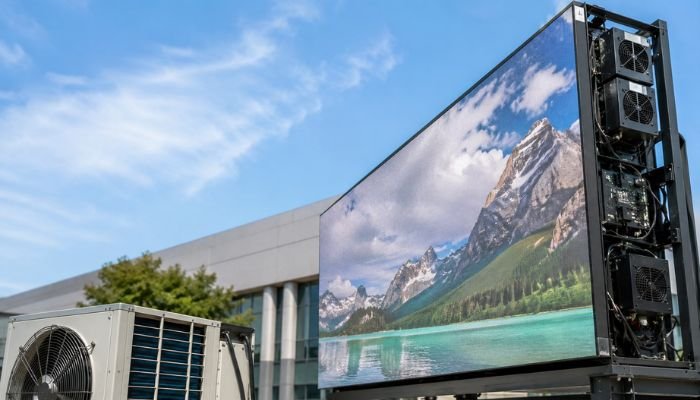
Most modern outdoor SMD screen cabinets use built-in fans to actively pull hot air out and push cooler air across internal components. This forced-air approach is significantly more effective than passive convection alone and is the standard cooling method for mid-to-large outdoor installations across Pakistan. Fan placement, airflow direction, and dust filtration all affect how well this system performs over time, which is why fan quality and maintenance access matter during installation planning.
3. Heat Sinks and Thermal Conduction
Individual LED modules and driver components are often mounted onto aluminum heat sinks that draw heat away from the electronics and disperse it across a larger surface area, where it can be carried away by airflow. This conduction-based cooling works alongside fans and ventilation, rather than replacing them, forming a layered cooling approach rather than relying on a single method.
4. Smart Temperature Sensors and Auto-Brightness Dimming
Higher-end outdoor SMD screen control systems include built-in temperature sensors that continuously monitor internal cabinet heat. When temperatures approach unsafe levels, the system can automatically reduce brightness — which directly lowers heat output from the LEDs — before triggering a full shutdown as a last resort. This kind of automated thermal management protects the hardware without requiring manual intervention during the hottest hours of the day.
5. Sealed vs Ventilated Cabinet Design
There’s an inherent trade-off between weatherproofing and cooling: a fully sealed cabinet offers better dust and water protection (a higher IP rating) but restricts airflow, while a ventilated design cools more effectively but needs careful engineering to keep dust and moisture out through filtered vents. Well-designed outdoor SMD screens balance both, using filtered, weather-resistant vents that allow airflow without compromising the IP rating needed for Pakistan’s dusty, occasionally rainy conditions.
Cooling Method Comparison
| Cooling Method | Effectiveness | Best Suited For |
| Natural Convection | Low to moderate | Small screens, mild climates, shaded locations |
| Forced-Air Fans | High | Most mid-to-large outdoor installations |
| Heat Sinks | Moderate (supportive) | Used alongside fans on all quality installations |
| Smart Thermal Sensors | High (protective) | High-brightness, high-traffic outdoor screens |
How Brightness and Heat Are Connected
Brightness and heat generation are directly linked in any outdoor SMD screen. Higher brightness output — necessary to stay visible under Pakistan’s intense daylight — requires driving LED chips harder, which produces more heat as a byproduct. This is exactly why high-brightness outdoor screens need proportionally stronger cooling systems than lower-brightness indoor displays. A buyer choosing a screen rated for 6,000–8,000 nits for direct sun exposure should specifically confirm that the cooling system is engineered for that brightness level, not just borrowed from a lower-brightness indoor design.
Why Cabinet Material Plays a Bigger Role Than Most Buyers Realize
Cabinet material affects heat management as much as any active cooling component. Die-cast aluminum cabinets, now standard in quality outdoor SMD screen builds, conduct and dissipate heat far more efficiently than older sheet-steel designs, while also resisting the corrosion that heat and humidity together can accelerate. Steel cabinets tend to trap heat longer and transfer it less efficiently, putting extra strain on whatever active cooling system is installed. When comparing outdoor SMD screen quotations, cabinet material should be treated as part of the cooling specification, not just a structural detail.
How Smart One Technologies Engineers Outdoor SMD Screens for Pakistani Summers
As a provider of indoor and outdoor SMD screens in Pakistan since 2005, Smart One Technologies specifies cooling systems based on local climate conditions at each installation site, not a one-size-fits-all approach. This includes matching fan capacity and cabinet ventilation to the screen’s brightness level, using die-cast aluminum cabinets for better heat dissipation, and — where appropriate — recommending control systems with built-in thermal protection. The company’s Hikvision Outdoor SMD Screen range is built with IP65-rated, ventilated cabinets designed specifically to handle Pakistan’s combination of intense heat, dust, and seasonal rain without compromising long-term reliability.
Buyers can see how these thermally engineered installations perform in real conditions on the Our Projects page, covering completed outdoor SMD screen projects across Lahore, Karachi, and Islamabad.
Maintenance Tips to Keep Cooling Systems Effective
A well-designed cooling system still needs upkeep to keep performing at its rated level:
- Clean dust filters regularly: Clogged filters restrict airflow and force fans to work harder, reducing cooling efficiency over time.
- Inspect fans periodically: Worn or failing fan motors should be replaced promptly, since a single dead fan can create a hot spot that affects nearby modules.
- Check vent seals after any repair: Reopening a cabinet for maintenance can compromise weatherproofing if vents and seals aren’t properly restored afterward.
- Monitor brightness settings seasonally: Running at unnecessarily high brightness during cooler months adds avoidable heat load and shortens component life.
Early Warning Signs of a Struggling Cooling System
Catching a cooling problem early can save an outdoor SMD screen from more expensive repairs later. A few warning signs worth watching for during peak summer months include:
- Uneven brightness across sections of the screen: Often the first visible sign that certain modules are running hotter than others due to localized airflow blockage.
- The screen dimming noticeably during the hottest part of the day: A sign that automatic thermal protection is actively reducing brightness to manage heat.
- Frequent unexplained restarts or shutdowns: Usually points to the control system hitting its temperature safety threshold repeatedly.
- A noticeably hot cabinet surface compared to nearby modules: Can indicate a failed or slowing fan in that section of the display.
Spotting these signs early and scheduling a maintenance check before a full breakdown occurs is far less costly than replacing heat-damaged LED modules or a burnt-out power supply mid-season.
Frequently Asked Questions
Why does an outdoor SMD screen need cooling if LEDs don’t get very hot individually?
While a single LED diode produces modest heat, an outdoor SMD screen contains thousands of them packed closely together, plus power supplies and control cards, all generating heat simultaneously inside an enclosed cabinet — which adds up quickly without proper airflow.
Can an outdoor SMD screen work without fans in Pakistan’s climate?
For small, low-brightness screens in shaded or mild locations, passive convection alone may be sufficient. For most mid-to-large, high-brightness installations exposed to direct summer sun, forced-air cooling with fans is generally necessary.
Does higher brightness always mean more cooling is needed?
Yes. Brightness and heat output are directly connected, since higher brightness requires driving LED chips harder, which produces more heat that the cooling system needs to manage.
How does dust affect an outdoor SMD screen’s cooling system?
Dust buildup on fans, filters, and heat sinks reduces airflow efficiency, which can cause internal temperatures to rise even if the cooling hardware itself is functioning correctly. Regular cleaning is essential in Pakistan’s dusty conditions.
What is the safe operating temperature range for an outdoor SMD screen?
Most quality outdoor SMD screens are rated to operate safely between roughly -20°C and 60°C internally, though the specific range depends on the LED chips, power supply, and control system used.
How often should an outdoor SMD screen’s cooling system be inspected in Pakistan?
A pre-summer inspection covering fan condition, dust filters, and vent seals is strongly recommended at least once a year, with more frequent checks in high-dust environments to prevent cooling efficiency loss before peak heat arrives.
Final Thoughts
An outdoor SMD screen built for Pakistan’s climate needs more than a bright panel and a weatherproof cabinet — it needs a cooling system engineered for the reality of prolonged summer heat, dust exposure, and continuous daily operation. Forced-air fans, die-cast aluminum cabinets, heat sinks, and smart thermal sensors all work together to keep components within safe operating limits, protecting both image quality and hardware lifespan. Buyers evaluating an outdoor SMD screen should ask about cooling design just as seriously as they ask about brightness and pixel pitch, since it’s the cooling system that ultimately determines whether the display survives its first Pakistani summer, let alone the next ten.
| Need an Outdoor SMD Screen Built for Pakistan’s Heat?
Smart One Technologies designs and installs outdoor SMD screens with climate-matched cooling systems across Pakistan. Get a free consultation and quote today. 📞 +92 321 408 6763 | ✉ sales@sot.com.pk | www.sot.com.pk |

0 Comments on “Outdoor SMD Screen Cooling System Explained: How LED Displays Survive Pakistan’s Extreme Heat”