
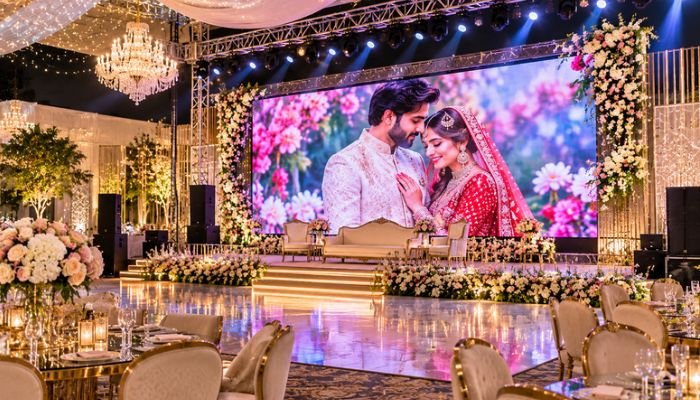
Quick answer: The right SMD screen for a wedding hall or event venue depends on audience distance, stage dimensions, camera use, daily event frequency and whether the display will be permanently installed or repeatedly moved. A venue should select the complete system, including processor, rigging, power, spares and operator workflow.
Large visual displays have become central to weddings, corporate events, exhibitions and live productions across Pakistan. A professionally planned SMD screen can carry live camera feeds, stage graphics, sponsor content, presentations and branded visuals while remaining visible to guests across a wide hall.
Permanent Venue Screen or Rental System?
A permanent LED screen is suitable for wedding halls, hotels and auditoriums that host events frequently. The structure, cabling and control equipment remain installed, reducing setup time and creating a consistent stage feature. A rental system uses modular cabinets designed for repeated assembly, transport and rigging. It suits event companies and venues that need different screen sizes for different productions.
Permanent installation emphasizes architectural integration, maintenance access and daily reliability. Rental equipment emphasizes quick locks, lightweight cabinets, transport protection and fast replacement. A venue should calculate event frequency, setup labour, storage, maintenance and expected screen layouts before deciding.
Choose Screen Size From the Audience View
Stage width alone should not determine the display size. Consider the farthest guests, the height of the screen above the floor and the type of content. A screen used mainly for live camera images can be planned differently from one showing detailed corporate slides.
Aspect ratio also matters. A standard 16:9 canvas handles video and presentations efficiently. Creative stage designs may use a wide central screen with side columns, but content must be produced for the exact pixel dimensions. Poorly matched content can create empty bands, cropping or soft scaling even on a high-quality LED wall.
Pixel Pitch and Viewing Distance
Pixel pitch affects image density. Guests seated close to an indoor stage normally benefit from a finer pitch, while a large outdoor event viewed from farther away may use a wider pitch. The best choice balances visual detail, total screen area, nearest viewing distance and budget.
Do not select pitch from a single online chart. Ask the supplier to calculate the native resolution and show representative event content. Fine text, faces, logos and camera feeds should be reviewed from the closest important seating position.
Brightness for Indoor and Outdoor Events
Indoor wedding halls require controlled brightness that complements stage lighting without overpowering guests or cameras. Excessive brightness can wash out photography and create uncomfortable contrast. Outdoor events need higher brightness to compete with daylight, along with weather protection and suitable cooling.
Brightness should be adjustable by trained operators. Daytime, evening and camera-recording presets help maintain a consistent look. An indoor screen should not be chosen simply because it has the highest nit rating.
Refresh Rate for Cameras and Live Production
Wedding and event screens are frequently filmed. A display that appears stable to the human eye can show horizontal bands, flicker or scan lines in photographs and video. Refresh rate, scan design, driver quality, camera shutter and frame rate interact with one another.
For camera-heavy venues, test the proposed system with the production cameras used by local teams. A high-refresh configuration and correct camera settings reduce visible artefacts. The test should include slow-motion recording, close shots and wide stage views.
Video Processor and Input Planning
The LED panels require a control system and video processor. List every source the venue may use, such as cameras, laptops, media players, presentation systems and live streaming equipment. The processor must support the final resolution, input formats, scaling and required screen layouts.
- Live camera feed with low latency
- Laptop and presentation inputs
- Playback computer for scheduled visuals
- Logo, sponsor or lower-third overlays
- Backup source and rapid switching
- Preview monitoring for the operator
Clear signal diagrams and labelled cables help production teams work faster during event changeovers.
Structure, Rigging and Safety
LED walls carry significant weight and electrical load. Ground-supported frames, wall structures and flown rigs require appropriate engineering and safe assembly. Rental cabinets must be locked correctly and supported with approved rigging components. Permanent installations need secure mounting, ventilation and maintenance access.
Power distribution should be designed around the approved configuration. Protection, grounding, cable sizing and isolation must be handled by qualified personnel. Emergency access and safe shutdown procedures should form part of the venue plan.
Content Design for Event Screens
Event content should be created for the physical display. Keep important text large, use strong contrast and protect titles from the edges. Wedding films, live feeds and animated backdrops should match the screen canvas. Fast motion and extremely fine patterns can create unwanted camera artefacts, so content should be tested before the event.
Create reusable templates for welcome screens, couple names, sponsor layouts, agenda slides and emergency notices. A controlled library reduces last-minute design problems and keeps the venue presentation professional.
Maintenance and Spare Planning
Venues need a practical response plan for dead pixels, damaged modules, loose data cables and power-supply faults. Keep compatible spare modules, receiving cards and power supplies where appropriate. Configuration files should be backed up, and technicians should know how to replace a component without disrupting the full system.
Regular cleaning, connection checks and ventilation inspection support consistent performance. Rental inventory should be inspected after every movement because transport increases mechanical risk.
Venue Buyer Checklist
- Measure stage, audience distance and screen height
- Confirm indoor, outdoor or mixed use
- Calculate native resolution and content canvas
- Test cameras at common frame and shutter settings
- List inputs, layouts and backup sources
- Approve structure, rigging and electrical design
- Plan operator training and content templates
- Agree spares, warranty and service response
Frequently Asked Questions
What pixel pitch is suitable for a wedding hall?
The choice depends on the closest seating distance, screen size and content detail. The final pitch should be confirmed after a site measurement and visual test.
Can an indoor screen be used for an outdoor event?
Indoor panels are not designed for direct weather exposure or daylight conditions. Outdoor-rated equipment should be used where environmental protection and high brightness are required.
Why does an LED screen flicker on camera?
Camera shutter, frame rate, screen refresh rate and scan configuration may be mismatched. Testing the complete production setup helps identify the correct settings.
Should a venue buy or rent an SMD screen?
Frequent events and a consistent stage design may justify permanent installation. Occasional events or changing layouts may favour rental. Total operating cost should guide the decision.
Plan an Event Venue Display
Smart One Technologies supplies and integrates indoor and outdoor LED display systems for venues across Pakistan. Review SMD display solutions or share your stage size, audience distance and event workflow through the contact page.
2027 Wedding Hall and Event Screen Planning
An SMD screen for wedding halls should be tested with the venue cameras, stage lighting and normal audience viewing positions before final approval. For cleaner recordings, compare 1920Hz and 3840Hz refresh rates. Designers can use the SMD screen content design guide to prepare names, sponsor slides and live-feed layouts, while the colour calibration guide explains how to keep skin tones and stage visuals consistent across modules.
Permanent venues should compare the complete range of indoor and outdoor SMD screen solutions; temporary productions should also confirm rigging, backup power and spare-module support with the supplier.

0 Comments on “SMD Screen for Wedding Halls and Event Venues in Pakistan | 2027 Guide”